
Tips & How-To
Cleaning Dust Off Detailed Sculptures Without Damaging Them
Sep
TL;DR
Dust carries grit that scratches, so lift it off detailed sculptures with a soft dry brush instead of wiping or pressing.
- Identify the material first and, if you can't tell, treat it as the most fragile option you're considering.
- Always start dry with a soft brush, working top down while holding a cloth below to catch what falls.
- Keep pressure off entirely: repeat light passes rather than pressing, and skip canned air on anything with flaking paint or finish.
Why Dust Loves Detailed Pieces
Cleaning dust off sculptures sounds simple until you’re holding one. The more detail a piece has, the more places dust can settle. Every groove, feather, petal and paw becomes a little shelf.
Dust isn’t just fluff either. It’s a mix of fabric fibres, skin cells, pet hair and fine grit from outside. That grit is the part that scratches.
If you're ready to add another detailed piece worth dusting, browse the handcrafted sculptures at lcdesigns.cc, each one made and finished in our own studio.
Learn more →So the real risk isn’t the dust sitting there. It’s what happens when you drag it across a surface with too much pressure.
Once you understand that, the whole job changes. You stop scrubbing and start lifting. That small shift protects a lot of delicate pieces.
Know What You’re Working With
Different materials want different treatment. A glazed ceramic piece can handle a damp cloth. A plaster or unsealed piece really can’t.
Take a minute to figure out what you’ve got before you touch it. Tap it gently and look at the base. Cold and heavy usually means stone, metal or ceramic.
Printed plastic pieces feel light and warm to the touch. They often have fine ridges from the printing process. Those ridges trap dust, but they also scuff easily.
Here’s a rough guide to keep in mind when you’re cleaning dust off a piece:
- Glazed ceramic: handles light moisture well
- Unglazed or bisque ceramic: dry methods only, it absorbs
- Plaster and resin: dry first, damp only if sealed
- Wood: dry dusting, never soak
- Metal: dry dusting, watch for tarnish and patina
- Printed plastic: dry or barely damp, no solvents
- Painted or gilded surfaces: gentlest option every time
When you can’t tell, treat it as the most fragile option. You lose nothing by being careful.
Start Dry, Always
Dry dusting should be your first move every single time. Water turns loose dust into mud. Mud gets pushed into crevices and dries there.
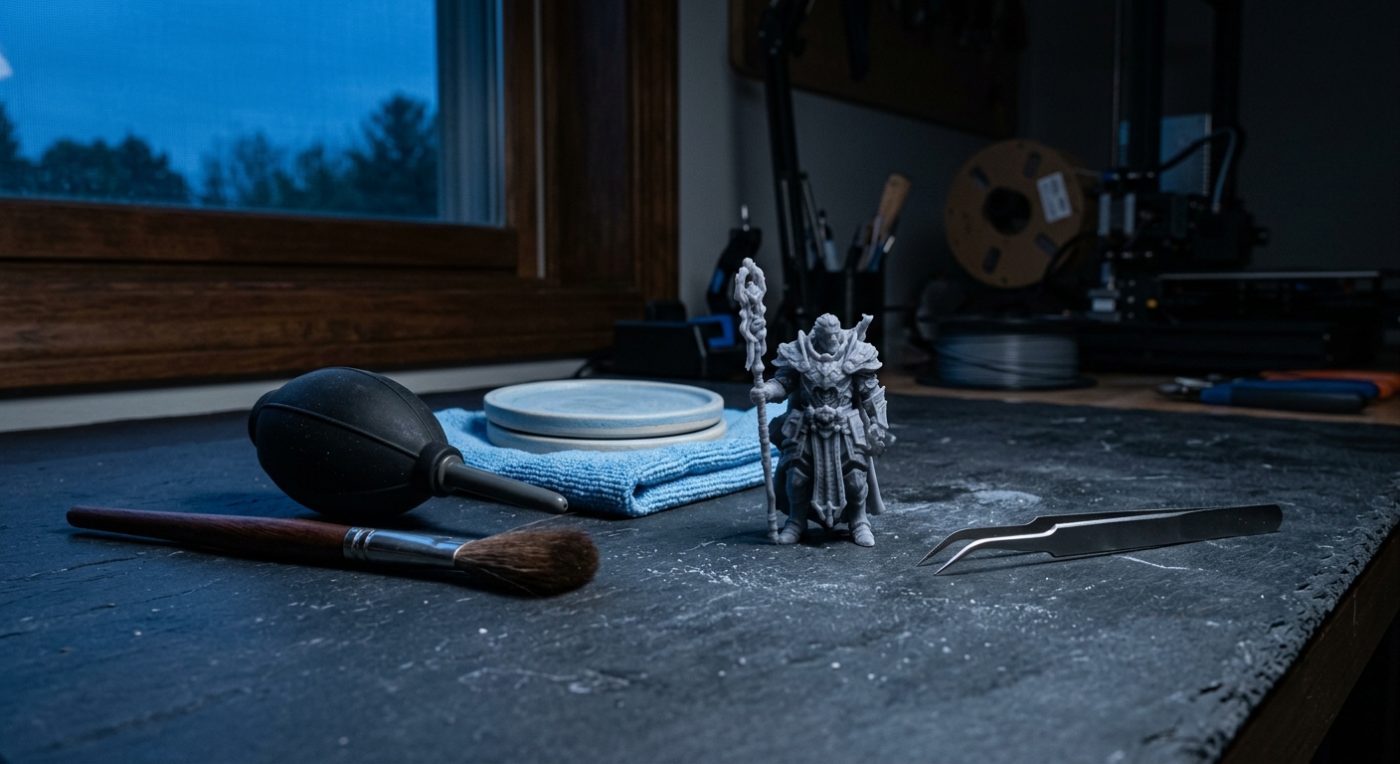
A soft brush is the best tool for cleaning dust off detailed work. Think makeup brush, artist’s brush or a clean paintbrush with natural bristles. The softer the better.
Work from the top down. Brush the dust off the piece rather than around it. Short, light flicks work better than long sweeps.
Hold a cloth or your hand below to catch what falls. Otherwise you’re just relocating the problem to the shelf underneath.
For tight spots, a dry cotton swab helps. Roll it rather than rubbing it. That lifts dust instead of grinding it in.
Handling Air, Cloths and Pressure
Canned air is tempting, and it does have a place. It’s great for cleaning dust off deep recesses you can’t reach with a brush. But it needs a light hand.
Hold the can upright and keep your distance. Short bursts, not a long blast. Too close and the propellant can leave a cold, wet spot on the surface.
Never use it on anything with loose paint or flaking finish. You’ll blow the finish clean off. Once that happens, there’s no fixing it at home.
For cloths, microfibre is your friend on smooth surfaces. Keep it clean and use it dry. A dirty cloth just spreads grit around.
The biggest rule of all is pressure. If you feel yourself pressing, stop. Repeat a gentle pass ten times before you press hard once.
When A Little Moisture Makes Sense
Sometimes dry dusting isn’t enough. Kitchens and busy rooms leave a greasy film that dust sticks to. That needs a touch of moisture.
Only do this on sealed, glazed or clearly waterproof surfaces. Dampen a cloth with plain water and wring it out hard. It should feel cool, not wet.
Work a small section at a time. Follow immediately with a dry cloth. Never let water sit in a crevice or pool at the base.
Skip household cleaners, polish sprays and anything with alcohol. They can dull finishes, soften paint and leave a sticky residue. That residue attracts more dust than you started with.
If you’re ever unsure, test on a hidden spot first. The underside or back is usually safe. Wait and check before going further.
Keeping Dust From Building Up
The easiest cleaning is the cleaning you don’t have to do. A short, regular pass at cleaning dust off beats a big rescue mission later. Once a month is plenty for most rooms.
Where you place a piece matters too. Shelves near vents, doorways and open windows collect far more dust. So do spots right beside a TV or electronics.
Glass cabinets cut dust dramatically. You don’t need a display case either. A shelf with a closed front does most of the work.
A few habits that help over time:
- Dust the room before you dust the pieces
- Vacuum with the hose held above, never touching
- Rotate pieces occasionally so one side doesn’t age faster
- Keep them out of direct sun where colour can fade
- Wash your hands before handling, oils transfer easily
- Lift from the base, never by a thin arm or wing
Handling is where most damage actually happens. More pieces break during a clean than from sitting still. Move slowly and clear your workspace first.
A towel on the table gives you a soft landing. It costs nothing and saves a lot of heartbreak.
Detailed pieces reward patience more than effort. Keep cleaning dust off gently, go often, and they’ll look right for years.
→Handmade Holiday Gifts for People Who Have Everything→Seashell Collecting With Kids: Sorting, Cleaning, Displaying
Frequently Asked Questions
What's the safest way to dust a detailed sculpture?
Start dry every time and use a soft brush, like a clean makeup brush or artist's brush with natural bristles. Work from the top down with short, light flicks so you're lifting dust off the piece rather than dragging it across the surface. Hold a cloth or your hand underneath to catch what falls.
Why is dust actually a risk to a sculpture?
Dust isn't just fluff. It's a mix of fabric fibres, skin cells, pet hair and fine grit tracked in from outside, and that grit is what scratches. The damage usually happens when someone drags it across the surface with too much pressure, not from the dust sitting there.
Can I use a damp cloth on my piece?
It depends entirely on the material. Glazed ceramic handles light moisture well, but unglazed or bisque ceramic absorbs it and should stay dry. Plaster and resin should be dusted dry first and only go damp if they're sealed, and wood should never be soaked.
How should I clean a 3D printed plastic piece?
Printed plastic feels light and warm to the touch and often has fine ridges from the printing process. Those ridges trap dust but also scuff easily, so stick to dry dusting or at most a barely damp cloth. Never use solvents on them.
Is canned air safe to use on sculptures?
It has a place for deep recesses a brush can't reach, but it needs a light hand. Hold the can upright, keep your distance and use short bursts rather than a long blast, since getting too close can leave a cold, wet spot from the propellant. Never use it on anything with loose paint or a flaking finish.
What if I can't tell what material my piece is made of?
Treat it as the most fragile option and use dry methods only. You lose nothing by being careful, and the gentlest approach works on every surface. The biggest rule is pressure: if you feel yourself pressing, stop and repeat a gentle pass ten times instead.

