
Industry Insights
Dark Botanical Decor: Why Moody Florals Are Trending This Fall
Oct
TL;DR
Dark botanical decor sets pale, glowing flowers against deep, moody backdrops to make rooms feel cozy and grounded as fall evenings get longer.
- Start with one dark base like forest green, inky navy, charcoal, plum or chocolate brown, then add just two or three accent shades.
- Pale pinks, creamy whites and soft golds stand out most against dark walls, while mustard, rust and burnt orange tie the look to fall.
- Layer matte, textured materials like velvet, aged wood and heavy linen so the space feels collected over time rather than shiny and new.
What Dark Botanical Decor Really Means
There’s a shift toward dark botanical decor happening in homes as the days get shorter. Bright, airy spaces are giving way to something deeper. Dark botanical decor pairs rich, shadowy backgrounds with lush flowers and leaves. It feels like walking into an old greenhouse at dusk.
The idea isn’t new. Painters in centuries past loved dark canvases with glowing blooms. Those still-life paintings had drama and warmth at the same time. Today’s dark botanical decor borrows that mood and brings it into everyday rooms.
Bring the moody floral mood home this fall with sculptural vases and flower sculptures, each printed and finished in our studio, ready to anchor your darker botanical corners.
Learn more →At its heart, dark botanical decor is about contrast. A deep backdrop makes every petal pop. Pale pinks, creamy whites and soft golds almost seem to glow against it. The flowers become the star of the room.
It’s also about texture and layering. You’ll see velvet, matte paint, aged wood and heavy linen. Nothing feels too shiny or too new. The goal is a space that feels collected over time.
Think of dark botanical decor as cozy with a little mystery. It’s not gloomy, and it’s not spooky. It’s just a richer, more grounded way to decorate.
Why Moody Florals Fit the Fall Season
Fall naturally pulls us toward deeper colours. The leaves turn rust, plum and burgundy outside. It makes sense that we want our homes to follow along. Moody florals and dark botanical decor feel like a natural bridge between seasons.
There’s also the light to think about. As daylight fades earlier, bright white walls can start to feel cold. Darker tones soak up lamplight and make a room feel snug. Evenings at home suddenly feel more inviting.
Flowers bring life into that darker setting. Summer gardens are winding down, but we still crave a bit of green. Botanical prints and dried arrangements keep that feeling going indoors. They remind us that nature is still close.
Many people also find dark botanical decor calming. Busy, bright rooms can feel a bit loud. Deep colours tend to quiet things down. That’s welcome during a season when life often gets hectic.
And frankly, it just feels right. Pulling a blanket over your knees in a dark, flower-filled room is hard to beat. The style matches how fall actually feels.
The Colours That Set the Mood
The backdrop is where it all starts. Most dark botanical decor leans on a few key shades. These colours create depth without making a space feel like a cave. Here are the ones you’ll see most often:
- Deep forest green, which feels earthy and calm
- Inky navy, a softer choice than true black
- Charcoal and near-black for the boldest look
- Plum and aubergine for a touch of richness
- Warm chocolate brown for an old-world feel
Once the base is set, the accents come in. Blush pink, dusty rose and cream are popular choices. Mustard, rust and burnt orange tie things neatly to fall. A little brass or gold adds a soft shine.
The trick is keeping the palette tight. Pick one dark base and two or three accent shades. Too many colours can muddy the effect. A focused palette lets the flowers shine.
Don’t forget the greens in the leaves themselves. Sage, olive and moss tones help everything feel connected. They act as a quiet link between dark walls and bright blooms.
If you’re nervous, test swatches first. Paint a large patch and look at it at night. Dark colours change a lot under lamplight. What looks heavy at noon can feel cozy by evening.
Easy Ways to Bring the Look Home
You don’t need to repaint your whole house. Small changes can bring dark botanical decor into a room. Start with one corner or one wall. You can always build from there.
Here are a few simple ideas to try:
- Paint a single accent wall in deep green or navy
- Hang vintage-style floral prints in dark frames
- Add a velvet cushion or throw in a jewel tone
- Gather dried flowers, grasses and seed pods
- Swap bright bulbs for warm, low lighting
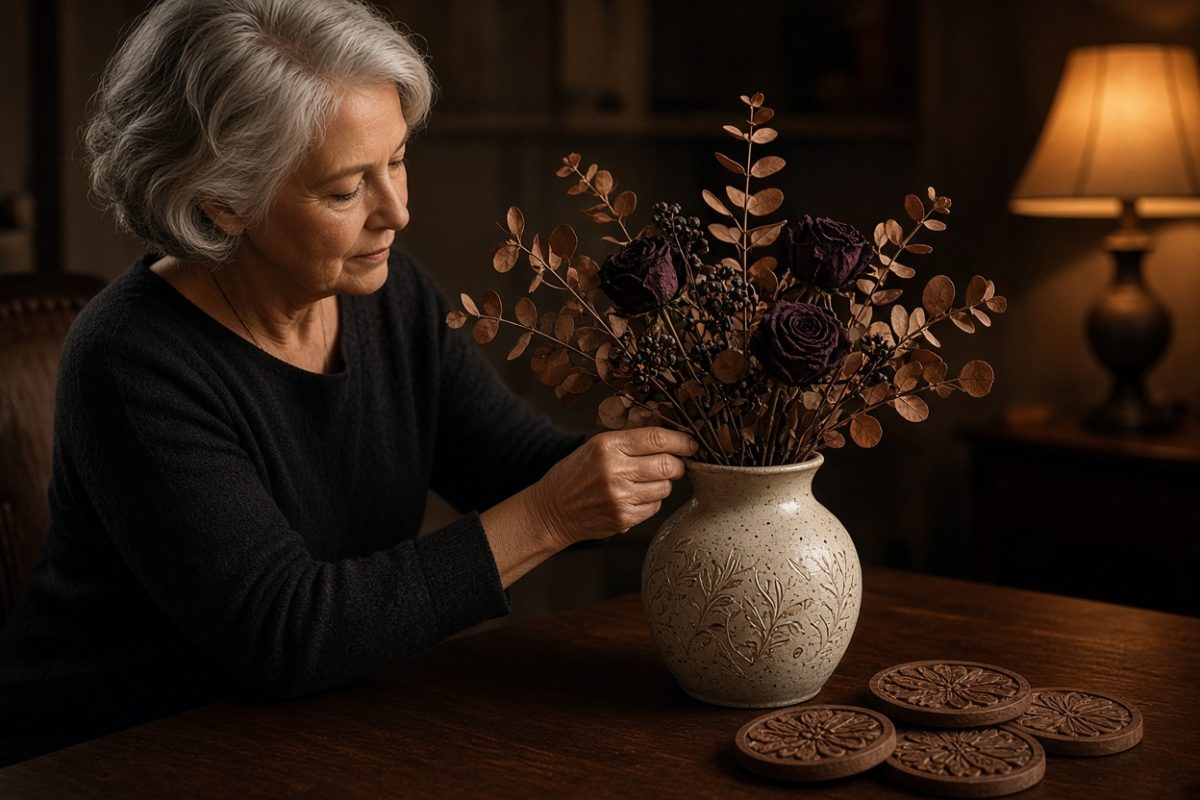
Dried arrangements are a great fall choice. Think dried hydrangea, eucalyptus, thistle and pampas grass. They last for months and only get more interesting with age. Their faded colours suit dark botanical decor perfectly.
Vessels matter too. Dark ceramics, smoky glass and sculptural shapes look lovely against deep walls. A simple stem in an interesting vase can say a lot. Sometimes one bloom is all you need.
Lighting is the secret ingredient. Candles, table lamps and string lights create soft pools of glow. Overhead lights can flatten the mood. Keep things low and warm instead.
Common Mistakes to Avoid
Dark botanical decor can go wrong if you’re not careful. The most common trap is letting a room feel too heavy. Without enough contrast, everything blends into one dim blur. Light accents are what keep it balanced.
Another mistake is skipping texture. A dark room with only flat surfaces can feel lifeless. Mix in velvet, wood, ceramic and woven pieces. Texture gives the eye places to rest.
Lighting is often overlooked too. One overhead light won’t cut it in a dark space. Plan for several light sources at different heights. That layered glow makes all the difference.
Watch out for overdoing the florals. Floral wallpaper, floral pillows and floral rugs all at once can feel busy. Pick one or two statement pieces. Let solid colours do the rest of the work.
Finally, don’t forget the size of the room. Small spaces can handle dark colours, but they need care. Keep clutter down and add a mirror or two. A little reflection opens things up nicely.
Making the Trend Your Own
Trends come and go, but dark botanical decor has staying power. It borrows from styles that have been loved for centuries. That gives it a timeless feel that doesn’t date quickly. It can grow with you over the years.
The best rooms reflect the people who live in them. Maybe you love wildflowers more than roses. Maybe you’d rather have deep plum than green. Follow what feels right to you.
Collect pieces slowly. A print from a market, a vase from a trip, flowers you dried yourself. These things carry stories. They make a moody room feel personal instead of staged.
It’s also fine to shift with the seasons. You might lean darker in fall and winter. Come spring, a few lighter touches can freshen up your dark botanical decor. The base stays the same while the details change.
Moody florals work because they balance shadow and life, depth and bloom. When a room holds both, it feels like fall settling in just right.
→Who Actually Makes Your Decor? Inside an In-House Studio→Secret Santa Ideas When You Barely Know the Person
Frequently Asked Questions
What is dark botanical decor?
Dark botanical decor pairs rich, shadowy backgrounds with lush flowers and leaves, so it feels a bit like walking into an old greenhouse at dusk. It borrows the mood of centuries-old still-life paintings, where glowing blooms sat against dark canvases. The heart of the style is contrast, with a deep backdrop that makes every petal pop.
Why are moody florals so popular in the fall?
Fall naturally pulls us toward deeper colours, with leaves outside turning rust, plum and burgundy. As daylight fades earlier, darker tones soak up lamplight and make a room feel snug, while bright white walls can start to feel cold. Flowers and botanical prints also keep a bit of green indoors once summer gardens wind down.
Isn't dark decor gloomy?
It doesn't have to be. Dark botanical style is meant to feel cozy with a little mystery, not spooky or depressing. Many people find deep colours calming because they quiet a room down, which is welcome during a busy season.
What colours work best for a dark botanical look?
Popular base shades include deep forest green, inky navy, charcoal or near-black, plum and aubergine, and warm chocolate brown. Accents like blush pink, dusty rose, cream, mustard, rust and burnt orange tie things to fall, and a little brass or gold adds a soft shine. Sage, olive and moss greens help everything feel connected.
How many colours should I use in a moody floral room?
Keep the palette tight by picking one dark base and two or three accent shades. Too many colours can muddy the effect. A focused palette lets the flowers be the star of the room.
Does LC Designs make anything with floral designs?
Yes, LC Designs makes mugs, tumblers, earrings and ceramic coasters, and many of the dog breed designs are shown among flowers. There are also flower and birth-month flower earrings, plus sculptures in a flowers and plants category. Everything is printed and finished in-house at the studio and sold online at lcdesigns.cc.

