
Tips & How-To
Jewellery Storage That Keeps 3D Printed Earrings Safe
Oct
TL;DR
3D printed earrings don't tarnish, but heat, pressure, scratching and yanked hooks can ruin them, so give each pair its own cool, uncrowded spot.
- Keep printed earrings away from sunny windows, radiators, car dashboards and steamy bathrooms, since the plastic can soften and warp at lower temperatures than you'd expect.
- Use compartment trays, drawer inserts or one soft pouch per pair so nothing stacks, rubs or tangles.
- Hang larger statement pieces on hooks or a mesh panel so nothing presses on them, and never pull a tangled pair out of a pile by the hooks.
Why 3D Printed Earrings Need Their Own Approach
Good jewellery storage for earrings isn’t one-size-fits-all. A pair of heavy metal hoops and a pair of lightweight printed earrings want very different homes. Treat them the same and one of them will suffer.
3D printed earrings are usually made from plastic filament. That means they’re light, they hold fine detail, and they can flex a little. Those are strengths. They also change what your jewellery storage needs to do.
With your storage sorted, browse the 3D printed earrings at lcdesigns.cc and find a lightweight pair that'll sit safely in your collection.
Learn more →The main risks aren’t tarnish or rust. They’re pressure, heat, scratching, and snapped findings. A drawer full of loose jewellery creates all four at once.
Once you know what you’re protecting against, the fix is usually simple. You don’t need anything fancy. You just need to stop doing a few common things.
The Four Things That Actually Damage Them
Heat is the big one. Printed plastic softens at temperatures lower than most people expect. A car dashboard on a sunny day is more than enough to warp a thin, detailed piece.
Pressure is second. Stacking heavy items on top of light printed earrings can flatten a curve or bend a flat panel. The damage often happens slowly, so you don’t notice until it’s obvious.
Then there’s abrasion. Printed surfaces can pick up fine scratches when they rub against metal chains, keys, or other earrings. Matte finishes tend to show this more than glossy ones.
Last is stress on the hardware. Hooks and posts are the narrowest point on any earring. Yanking a tangled pair out of a pile is how most of them fail.
- Heat: warping, softening, loss of shape
- Pressure: flattening, bending, cracking
- Abrasion: scuffs and dull spots on the surface
- Stress: bent posts, opened hooks, separated pieces
Where To Keep Them In Your Home
Pick a spot away from windows. Direct afternoon sun does two things: it heats the plastic and it can fade colour over time. A shaded shelf beats a bright windowsill every day of the week.
Bathrooms are a tougher call than people think. The heat and humidity from showers aren’t great for any jewellery, and glued components don’t love steam. A bedroom drawer is a safer default for jewellery storage.
Avoid anywhere near a heat source. That means not on top of a radiator, not beside a baseboard heater, and not next to a sunny patio door.
Height matters too if you have pets or small kids. Lightweight earrings are easy to knock off a dresser and hard to find once they hit carpet. A closed container at the back of a shelf solves it.
Storage Formats That Work Well
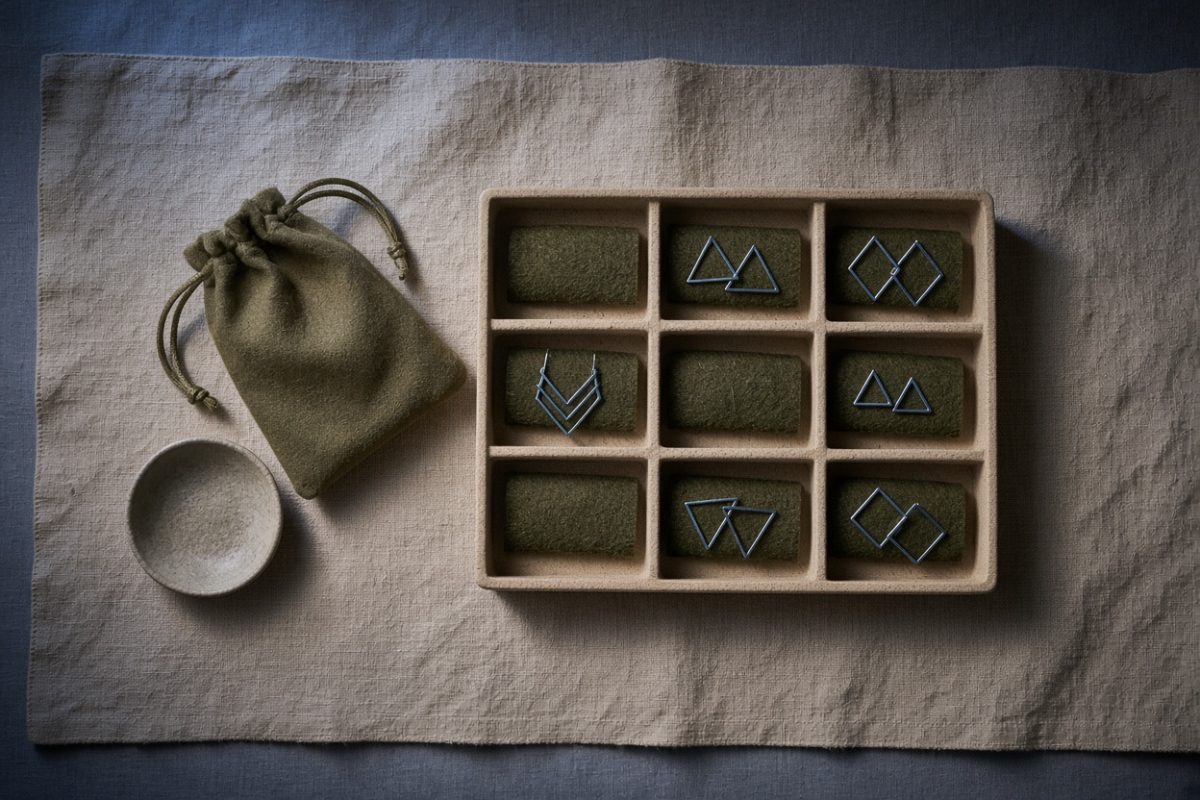
Compartment trays are hard to beat. Each pair gets its own square, so nothing rubs and nothing stacks. Shallow drawer inserts do the same job inside furniture you already own.
Small soft pouches work nicely for dangly styles. One pair per pouch keeps hooks from tangling, and the fabric cushions the piece. Label them if you own a lot and hate digging.
Hanging displays suit statement earrings, especially larger printed designs. Hooks or a mesh panel let each pair hang free with nothing pressing on it. Just remember that open jewellery storage collects dust.
If you like seeing your collection, a hanging setup in a shaded corner is a fair compromise. Wipe the pieces occasionally and you’re fine.
- Divided trays: best all-round protection
- Individual pouches: great for hooks and dangles
- Hanging panels: good visibility, more dust
- Flat boxes with foam inserts: excellent for travel
Travelling Without Breaking Anything
Travel is where most earrings meet their end. Bags get crushed, contents shift, and small things end up at the bottom under a shoe. A little planning prevents almost all of it.
Use a rigid case rather than a soft pouch inside luggage. A hard shell takes the pressure so your earrings don’t. Even a small pill organizer or a repurposed mint tin with tissue works.
Keep jewellery in your carry-on when you fly. Checked bags sit in cargo holds and get handled roughly. Your carry-on stays with you and stays at a reasonable temperature.
Never leave a case in a parked car. A closed vehicle in summer gets hot enough to deform plastic, and it happens faster than you’d guess.
One more habit worth building: put them away as soon as you take them off. Hotel nightstands are where earrings go to be forgotten.
Small Habits That Extend Their Life
Handle earrings by the body, not the hook. Lifting by the wire bends it over time, and a bent hook eventually snaps. Pinch the main piece instead and the hardware lasts much longer.
Put them on last and take them off first. That keeps them clear of hairspray, perfume, lotion, and the tug of a sweater coming over your head.
Clean them gently when they need it. A dry soft cloth handles dust, and a barely damp cloth handles the rest. Skip the harsh cleaners and the ultrasonic machines, which are made for metal and stone.
Check your findings once in a while. A loose hook or a wobbly post is easy to notice before you go out and annoying to discover afterward.
Jewellery storage isn’t glamorous, but it’s the quiet reason some pieces last for years and others don’t. A little care up front buys you a lot of wear later.
→Handmade Holiday Gifts for People Who Have Everything→Searching Your Dog's Breed and Finding Nothing Close
Frequently Asked Questions
What are 3D printed earrings actually made of?
They're printed from plastic filament, which makes them light, detailed and able to flex a little. That's why they behave differently from metal jewellery in storage. The risks you're guarding against are heat, pressure, abrasion and stress on the findings rather than tarnish or rust.
Why does heat damage 3D printed earrings?
Printed plastic softens at lower temperatures than most people expect, so a thin, detailed piece can warp without much warning. A car dashboard on a sunny day is more than enough to do it. Keep them away from radiators, baseboard heaters and sunny patio doors.
Where's the best place in my home to store printed earrings?
A shaded shelf or a bedroom drawer away from windows is a safe default. Direct afternoon sun both heats the plastic and can fade colour over time. If you have pets or small kids, a closed container at the back of a shelf keeps lightweight pairs from getting knocked onto the carpet.
Can I keep my earrings in the bathroom?
It isn't ideal. The heat and humidity from showers aren't great for any jewellery, and glued components don't love steam. A bedroom drawer is a better spot.
What kind of storage format works best?
Compartment trays are hard to beat, since each pair gets its own square so nothing rubs or stacks. Shallow drawer inserts do the same job inside furniture you already own, and small soft pouches, one pair per pouch, suit dangly styles by keeping hooks from tangling. Hanging displays work for larger statement pieces, though open displays do collect dust.
Why do earring hooks and posts bend or break?
Hooks and posts are the narrowest point on any earring, so they take the most stress. Most failures happen when someone yanks a tangled pair out of a pile of loose jewellery. Storing one pair per compartment or pouch removes the tangling and the tugging that goes with it.

