
Behind the Scenes
Made in the Studio, Not Ordered From a Warehouse
Sep
TL;DR
Studio-made pieces carry small variations because one person handles every stage and answers for the result, while warehouse goods trade that accountability for uniformity.
- Treat slight differences in glaze, edges or finish as evidence of handwork, not defects to worry about.
- Remember that small-batch making puts quality decisions with the person who made the piece, so problems get caught and remade rather than passed along.
- Read listings for specifics about materials and method: vague adjectives usually mean there's less to say.
What “Made in the Studio” Actually Means
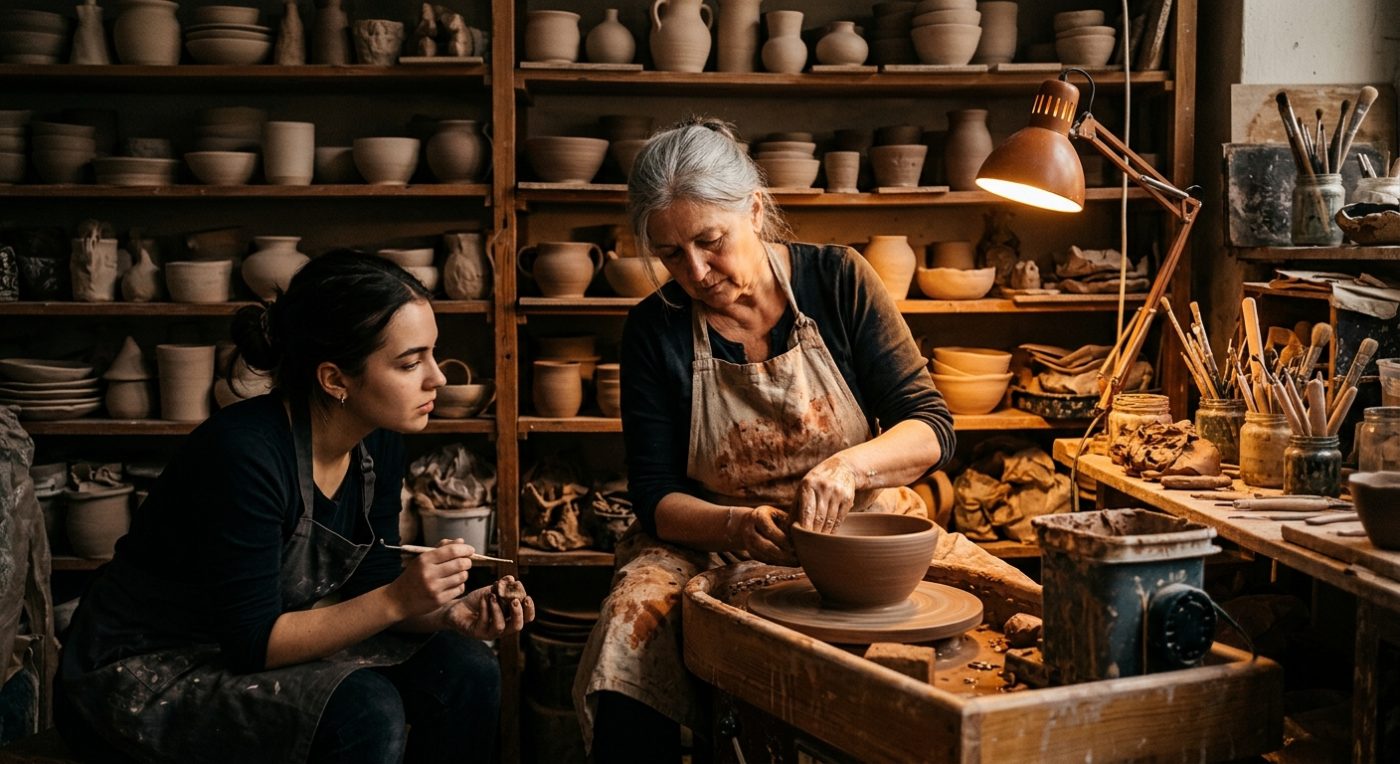
There’s a real difference between a piece made in the studio by a person and a piece pulled off a shelf. Handmade studio pottery sits firmly in the first camp. Someone chose the shape. Someone watched it come out of the kiln.
Made in the studio means the maker is close to every stage. They mix, form, fire and finish. If something goes wrong, they see it happen. There’s nobody further down the line to blame.
If you'd rather own something made by hand than pulled off a warehouse shelf, browse the sculptures, coasters and 3D printed pieces we produce in our own studio.
Learn more →Warehouse goods work the opposite way. A design gets sent out, produced at volume, boxed and stored. By the time it reaches a customer, it has passed through many hands and none of them are accountable for how it looks.
Neither method is secretly evil. Mass production exists because it works for certain things. But the two processes produce different objects, and it helps to know which one you’re holding.
Why the Maker’s Hand Shows Up in the Finished Piece
Small variations are the tell. Two pieces made in the studio will never be identical twins. A glaze pools slightly differently. An edge carries a faint mark from where it was held.
Some people read that as a flaw. It isn’t. It’s the record of a process that involved a human being making decisions in real time.
Warehouse production works hard to erase that. Uniformity is the goal, because uniformity is easier to sell, ship and replace. A thousand identical items make the logistics simple.
With handmade studio pottery, the opposite is true. The variation is part of what you’re getting. It’s evidence, not error.
Once you start noticing it, you notice it everywhere. In furniture, in textiles, in printed work. The hand leaves a signature whether the maker intends it or not.
The Quality Control Question
Here’s something worth thinking about: who decides when a piece is good enough? For work made in the studio, that’s usually one person or a small team. They set the line and they hold it.
That person has to live with the decision. If they let something weak go out, they hear about it directly. There’s no customer service department absorbing the complaint.
Large-scale production distributes that responsibility until it nearly disappears. A tolerance gets written into a spec. Anything inside it passes, whether or not it looks right.
The studio approach can be slower and less predictable. But the standard tends to be personal rather than procedural. Somebody cares how it turned out.
- A maker sees every piece before it leaves
- Rejected work gets remade, not repackaged
- Standards come from pride rather than a chart
- Feedback reaches the person who made the object
- Small batches make problems visible early
How to Tell What You’re Looking At
Descriptions tell you a lot if you read them carefully. Honest makers describe what a thing actually is. They mention materials, method, and the limits of what they’ve made.
Vague language is a warning sign. When a listing leans on adjectives instead of facts, there’s usually a reason. Specifics are harder to fake than enthusiasm.
Photos help too. Look for images that show the piece from several angles, in ordinary light. Heavily styled shots can hide as much as they reveal.
Ask yourself whether the seller seems to know the object. Someone who made it can tell you why it looks the way it does. Someone who ordered a pallet of them usually can’t.
None of this requires expertise. It just requires slowing down for a minute before you decide.
Why Small Catalogues Look Different
Studio makers usually work narrow and deep. They pick subjects they actually care about and stay with them. That’s why you find oddly specific things in small shops.
A warehouse catalogue works the other way. It chases the broadest possible appeal, because storage space costs money and slow sellers are a liability. Niche items get cut.
The result is that work made in the studio is often the thing nobody else bothered to make. A particular bird. A particular breed of dog. A flower that only matters to the people it matters to.
That specificity is a function of scale. When you make things yourself, you don’t need thousands of buyers to justify a design. You need enough.
It also means the maker probably shares your interest. They didn’t pick the subject from a trend report. They picked it because they liked it.
What You’re Really Buying
When you choose something made in the studio, you’re buying a set of decisions. Someone decided the finish was right. Someone decided the design was worth the effort.
You’re also buying a shorter chain. Fewer steps between the making and the receiving means fewer places for the original intent to get watered down.
That doesn’t make studio work automatically better for every purpose. Sometimes you need forty matching things and you need them cheap. That’s fine.
But for objects meant to sit in your home for years, the difference matters. Something made in the studio, with a person behind it, tends to hold your attention longer.
- Small-run work carries visible evidence of its making
- Honest descriptions beat impressive adjectives
- Narrow catalogues often signal genuine interest
- Accountability shrinks as production scales up
- Variation and defect are not the same thing
The next time you pick something up, look for the hand in it. Once you know what to look for, it’s difficult to unsee.
→Made in Studio: What In-House Printing Controls→How to Keep Ceramic Coasters Looking New for Years
Frequently Asked Questions
What does it mean that LC Designs items are made in the studio?
It means the printing, sublimation and finishing all happen in our own studio rather than being ordered in from a warehouse. Nothing is bought in as a finished product for resale. The person making your piece is the same person who checks it before it ships.
Will my item look exactly like the photo?
It'll be very close, but small variations are normal in studio-made work. Slight differences in finish or placement are part of how handmade and hand-finished pieces turn out. The listing photos show the design you're getting.
What kinds of products does LC Designs actually make?
We make sculptures and statues, including animals, people, birds, flowers and plants, sea life and abstract pieces. We also make 3D printed earrings, small toys, ceramic coasters and ceramic car coaster sets. Coaster designs cover dog breeds, sea life and automotive themes.
Can I order a custom piece or have something personalised?
No, we don't take custom orders, commissions or personalisation requests. Every product is sold exactly as it appears in the listing. If you want something breed-specific, it's worth searching the catalogue, since it's organised by breed and subject.
Why are your coasters listed by dog breed instead of in one big category?
Because that's how people search. Someone looking for their own dog's breed types that breed name, so a listing like a Golden Retriever in Flowers ceramic car coaster set is easier to find than a generic dog coaster page. The catalogue is deliberately long-tail and breed-specific for that reason.
Do you ship orders, or can I pick up in person?
All orders are shipped. There's no physical storefront and no local pickup, so everything is sold online at lcdesigns.cc and sent out from the studio. Every order is made and shipped by us directly, with no dropshipping involved.

