
Industry Insights
Why the Same Gift Shows Up at Every Party
Sep
TL;DR
Duplicate gifts happen because shoppers face the same stores, the same search results and the same low-risk instincts, not because anyone's being lazy.
- Shopping late and fast pushes you toward the same bestsellers everyone else sees, so start looking earlier to widen your options.
- Playing it safe with neutral, familiar items is a shared instinct, which is exactly why the whole gift table ends up matching.
- A gift feels personal when it points at something specific the person already shows you, like a pet, a hobby or a colour they reach for again and again.
The Party Gift Table Tells a Story
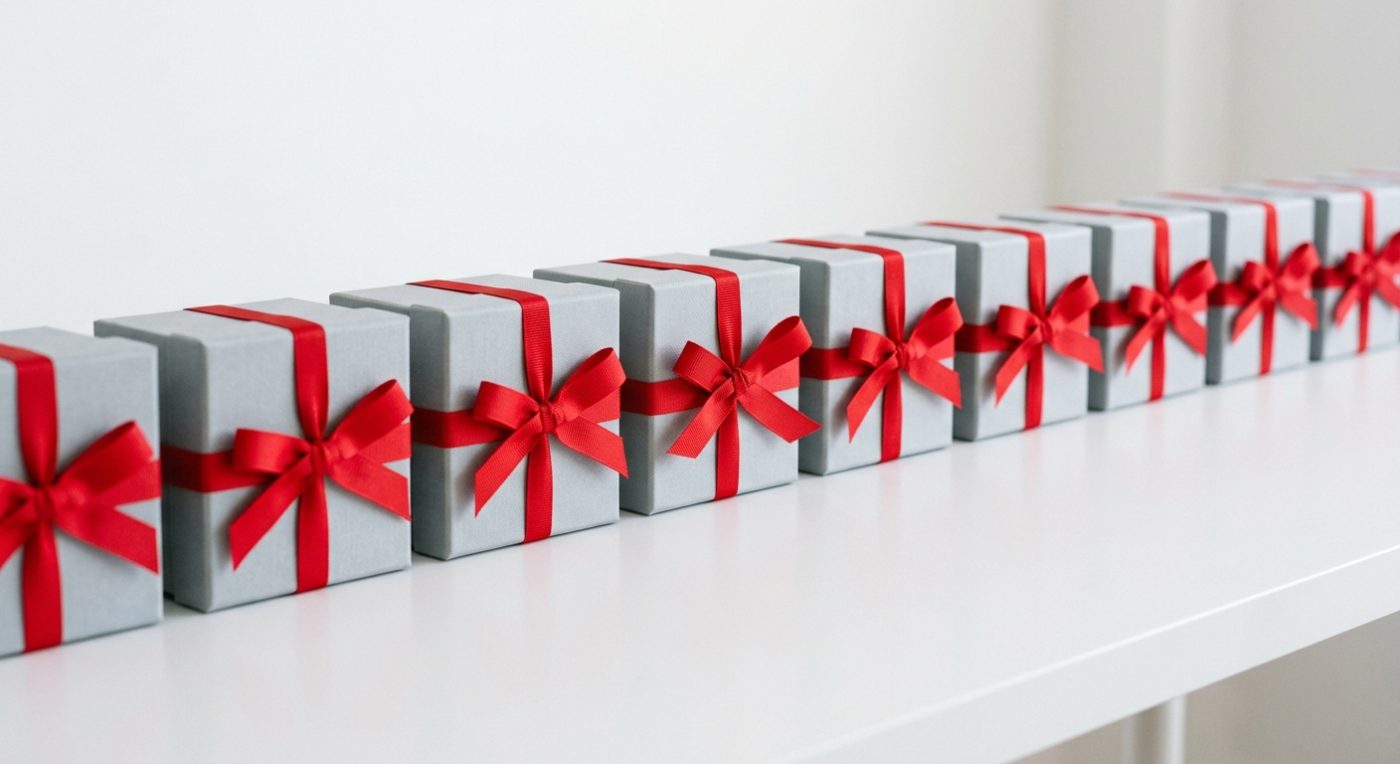
You walk into a baby shower or a housewarming and the same gift shows up before you’ve even set yours down. The gift table is already half full. And there it is again: the same candle, the same bottle, the same blanket in the same three colours.
It’s not a coincidence. It happens at birthdays, at holidays, at retirements. The same handful of items show up over and over, year after year.
If you'd rather skip the gift everyone else brought, browse our handcrafted sculptures, 3D printed earrings and breed-specific ceramic coaster sets, each one made in our studio.
Learn more →Nobody plans this. No guest wakes up hoping to duplicate someone else’s gift. Yet it keeps happening anyway.
There’s a reason for it, and it’s more interesting than laziness. The way we shop, the way we decide, and the way we manage risk all push us toward the same shelf.
We Are All Shopping in the Same Places
Most people buy gifts under time pressure. That means shopping where it’s fastest, which usually means a big store or a big website.
Those places carry what sells. What sells gets more shelf space. More shelf space means more sales. The loop feeds itself.
So a handful of items get pushed to the front for everyone at once. Ten different guests can shop independently and still land in the same aisle.
Search results work the same way. Type in “gift for new home” and you’ll see what everyone else sees. The algorithm doesn’t know you’re the fourth person asking.
Different shoppers, same inputs, same outputs. The duplication is baked in before anyone even picks something up.
The Safe Choice Is a Shared Choice
Gift giving carries real social risk. Nobody wants to hand over something that lands badly in front of a room of people.
So we hedge. We pick things that are hard to dislike: neutral colours, familiar categories, nothing too specific. Safety is the whole strategy.
The trouble is that safe is not a personal taste. Safe is a shared instinct. When everyone hedges the same way, everyone hedges into the same item.
There’s also the price anchor. Most guests have a rough number in mind for the occasion. That number narrows the field fast.
Combine a tight budget range with a low-risk category, and the pool of options shrinks to almost nothing.
What Actually Makes a Gift Feel Personal
Ask people about a gift they still remember, and they rarely mention the price. They mention that the giver clearly knew something about them.
That’s the real ingredient. Not cost, not cleverness. Evidence that someone was paying attention.
Personal doesn’t mean expensive or elaborate. It means the gift points at something specific about the person receiving it.
A few things tend to signal that attention:
- A reference to a hobby they talk about often
- Something tied to a pet they clearly adore
- A theme they’ve decorated their home around already
- A nod to a place that matters to them
- Something that matches a collection they’ve started
- A colour or style they reach for again and again
None of those require insider knowledge. They require noticing what someone already shows you.
How to Break the Pattern Without Overthinking It
Start earlier than you think you need to. Most duplicate gifts are bought in a hurry, three days out or less.
Give yourself a week and the whole process changes. You have time to think about the person instead of the deadline.
Keep a running note on your phone. When someone mentions a breed they love, a bird they watch, a flower they grow, write it down.
Then narrow before you shop. Decide on a theme first, then go looking. Browsing without a filter is how you end up in the same aisle as everyone else.
Some questions worth asking yourself before you buy:
- What does this person talk about without being asked?
- What’s already on their walls or shelves?
- What would they never buy for themselves?
- Is this specific to them, or could it go to anyone?
- Would they recognise it as coming from me?
That last question does a lot of work. If the answer is no, keep looking.
Why Specific Beats Universal
There’s a fear that a specific gift is a riskier gift. If you narrow it down, you might get it wrong.
That fear is mostly overblown. Specific gifts fail rarely, and when they do, it’s usually because the giver guessed instead of observed.
A universal gift almost never fails outright. It also almost never lands. It sits politely in the pile and gets forgotten by Tuesday.
Specific gifts get kept. They get put somewhere visible. They get mentioned later, sometimes years later.
Think about the difference in how the two feel to open. One says “I bought you a gift.” The other says “I thought about you.”
That’s not a small gap. It’s the whole point of the exercise.
Small Shifts That Change the Outcome
You don’t need to reinvent your habits. A few small changes cut duplication dramatically.
Ask the host, if there is one. A quick message about what’s already been bought takes thirty seconds and saves everyone the awkwardness.
Skip the front table. Whatever is stacked at the entrance is what everyone else grabbed too. Walk past it on purpose.
Look at smaller makers and narrower categories. The more specific the catalogue, the less likely two guests land on the same thing.
A few more habits worth keeping:
- Buy through the year, not the week of
- Note what people admire out loud
- Avoid anything advertised as a universal crowd pleaser
- Choose a theme over a category
- Trust the thing that made you smile for them
The gift table will always have a few repeats. That’s fine, and nobody is really keeping score.
But the gifts people remember are the ones that could only have been meant for them. Paying a little attention is the whole trick.
→Handmade Holiday Gifts for People Who Have Everything→Wrapping Awkward Shapes: Gift Wrap Tricks That Work
Frequently Asked Questions
Why do so many guests end up bringing the same gift to a party?
Most people shop for gifts under time pressure, which pushes them toward the same big stores and the same search results. Those places promote whatever already sells well, so ten guests shopping separately can still land on the same candle or blanket. The duplication happens before anyone even picks an item up.
What actually makes a gift feel personal?
People rarely remember what a gift cost. They remember that the giver clearly knew something about them, whether that's a hobby, a pet, a colour they reach for again and again, or a theme they've already decorated around. Personal doesn't mean expensive, it means the gift points at something specific about the person receiving it.
What kinds of gifts does LC Designs make?
LC Designs makes handcrafted home decor, jewellery and giftware, including sculptures and statues, 3D printed earrings, small toys, ceramic coasters and ceramic car coaster sets. Sculpture themes cover animals, people, birds, flowers and plants, sea life and abstract designs. Coaster designs run to dog breeds, sea life and automotive themes.
Can I get a gift made for someone's specific dog breed?
The catalogue is breed-specific, so products are titled by breed, such as a Golden Retriever in Flowers Ceramic Car Coaster Set. Buyers usually arrive searching their own dog's breed and find a matching listing. Products are sold exactly as listed, and custom orders, commissions and personalisation aren't offered.
Are LC Designs products made in-house or bought in from elsewhere?
Everything is produced in-house at the studio, including printing, sublimation and finishing. No finished goods are bought in for resale and nothing is dropshipped, so every order is made and shipped by LC Designs. Some designs are licensed from other creators and printed under those licences.
Can I pick up an order in person or visit a shop?
There's no physical storefront and no local pickup available. LC Designs sells online only at lcdesigns.cc, and orders are shipped out after they're made in the studio.

