
Behind the Scenes
How Ceramic Coasters Are Sublimated: A Look at the Process
Oct
TL;DR
Sublimation uses heat to turn ink into a gas that bonds with a coated ceramic tile, so the design becomes part of the surface instead of sitting on top.
- A tile can only take a sublimation print if it has a special coating, which also gives the face its gloss and makes it wipe clean.
- Designs are printed in reverse on transfer paper, and the colours look dull until heat brings them out, so makers rely on test prints.
- Time, temperature, pressure and alignment in the heat press all need to be right, or you can get faded colour, scorching or a faint double image.
What Sublimation Actually Means
If you’ve ever wondered how a detailed dog portrait ends up on a coaster, it’s usually because the coasters are sublimated. Sublimation ceramic coasters start as plain tiles with a special coating. Heat, not paint, adds the design.
Sublimation is a process where ink turns from a solid into a gas. It skips the liquid stage entirely. That gas then bonds with a coated surface.
Curious how that sublimated gloss face looks on your own dog's breed? Browse our ceramic coasters and car coaster sets, each printed and finished in our studio.
Learn more →Once it cools, the ink becomes part of the coating itself. It isn’t sitting on top like a sticker. That’s why a good sublimation print looks smooth and rich.
It’s a neat bit of science that most people never think about. But it shapes how the finished piece looks and feels. Knowing how makers sublimate coasters makes it easier to judge quality when you shop.
Starting With the Right Tile
Not every ceramic tile can take a sublimation print. Before anyone sublimates a coaster, the tile needs a special coating on its face. Without that coating, the ink has nothing to bond with.
The coating is what gives the finished coaster its gloss. It’s also what makes the printed face non-absorbent. Spills sit on top and wipe away.
Before printing, the tile surface needs to be clean. Dust, fingerprints and specks can show up in the final image. A tiny flaw at this stage can spoil the whole piece.
Here’s what a maker checks before a tile goes near the press:
- The coating is even across the whole face
- There are no chips along the edges
- The surface is free of dust and smudges
- The tile sits flat without wobbling
Printing the Design in Reverse
When makers sublimate coasters, the design doesn’t go straight onto the tile. They first print it onto special transfer paper using sublimation ink. That paper acts as the carrier for the image.
The maker prints the image as a mirror image. When they flip it face down onto the tile, it reads the right way. Forget to mirror it, and any text comes out backwards.
Colour matters a lot at this stage. Sublimation ink often looks dull on the paper. The true colours only appear once someone applies heat.
That can be tricky for anyone new to the process. You learn to trust test prints rather than what the paper shows. Getting colours right takes practice and patience.
Fine details need care too. A dog’s whiskers or a butterfly’s wing pattern can blur if the file isn’t sharp. A clean, high-resolution design is the foundation of a crisp print.
The Heat Press Does the Real Work
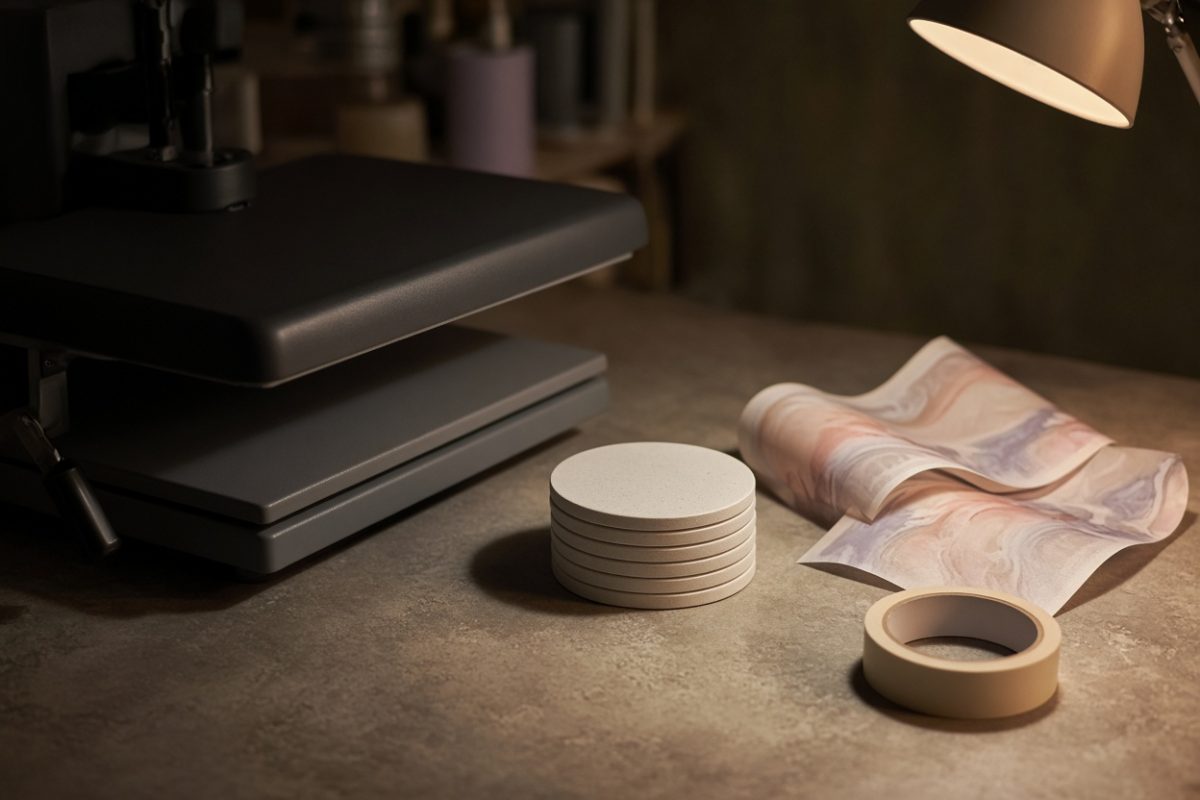
Once you’ve lined up the paper on the tile, everything goes into a heat press. The press applies steady heat and firm pressure. This is the moment the ink turns to gas and sublimates the coasters.
Alignment is critical. The paper is usually secured with heat-resistant tape. If it shifts even slightly, you can get ghosting, a faint double image.
Time, temperature and pressure all have to work together. Too little heat leaves faded colours. Too much can cause scorching or a yellow tint.
Every press behaves a little differently. Makers learn their own equipment through trial and testing. Settings that work in one studio may not suit another.
When the press opens, someone carefully peels the paper away. The tile is extremely hot at this point. Someone sets it aside to cool before anyone handles it further.
Finishing and Checking Each Piece
A printed tile isn’t finished yet. Once the coasters come out of sublimation, they usually get a cork backing on the underside. The cork helps protect tabletops from scratches.
Car coasters follow the same idea in a smaller shape. They’re made to sit in a vehicle’s cup holder. The ceramic face and cork backing work together there too.
Then comes the inspection. This is where a careful maker earns their reputation. Each piece gets a close look under good light.
Common flaws worth catching include:
- Faded or patchy colour
- Ghosting from paper movement
- Specks trapped under the print
- Cork that’s off-centre or lifting
A piece with any of these problems shouldn’t go out. It’s better to reprint than to ship something that isn’t right. This final check decides quality.
Why the Process Matters to You
You might never see a heat press in action. But the process shows up in what lands on your table. When sublimation goes well, the print is sharp, bright and even.
The sealed gloss face makes everyday care simple. A damp cloth handles most spills. There’s no need to fuss over the printed surface.
It also explains why a breed-specific design can look so lifelike. Sublimation captures fine shading and soft colour blends. That suits detailed portraits of dogs, birds and sea life.
When you know what goes into each piece, you can spot the difference. Look for clean edges, true colours and a smooth finish. Those details tell you real care went into the work.
Sublimation looks simple from the outside, but every step builds on the one before it. A great coaster is really the sum of many small things done right.
→Handmade Holiday Gifts for People Who Have Everything→Sublimation Coasters: How They're Made and How to Care for Them
Frequently Asked Questions
What does sublimation actually mean when it comes to ceramic coasters?
Sublimation is a process where ink turns from a solid straight into a gas, skipping the liquid stage entirely. That gas bonds with a special coating on the tile's face. Once it cools, the ink becomes part of the coating itself rather than sitting on top like a sticker, which is why a good print looks smooth and rich.
Can any ceramic tile be used for a sublimation coaster?
No, the tile needs a special coating on its face for the ink to bond with. Without that coating, the ink has nothing to grab onto. Before printing, a maker checks that the coating is even, the edges aren't chipped, the surface is clean and the tile sits flat.
Are LC Designs ceramic coasters easy to clean?
Yes. Every LC Designs coaster and car coaster is ceramic with a sealed gloss face and a cork backing. The printed face isn't absorbent, so spills sit on top and wipe clean.
Why is the design printed as a mirror image?
The design is first printed onto special transfer paper, and that paper is flipped face down onto the tile. Printing it as a mirror image means it reads the right way once it's transferred. If it isn't mirrored, any text comes out backwards.
Why does sublimation ink look dull on the transfer paper?
Sublimation ink often looks faded on the paper, and the true colours only appear once heat is applied. That's why makers learn to trust test prints instead of what the paper shows. Getting colours right takes practice and patience.
What can go wrong during the heat press stage?
If the transfer paper shifts even slightly, you can get ghosting, which is a faint double image, so the paper is usually secured with heat-resistant tape. Time, temperature and pressure all have to work together. Too little heat leaves faded colours, while too much can cause scorching or a yellow tint.

