
Tips & How-To
Coffee Table Styling: How Many Objects Is Too Many?
Sep
The Coffee Table Problem Nobody Warns You About
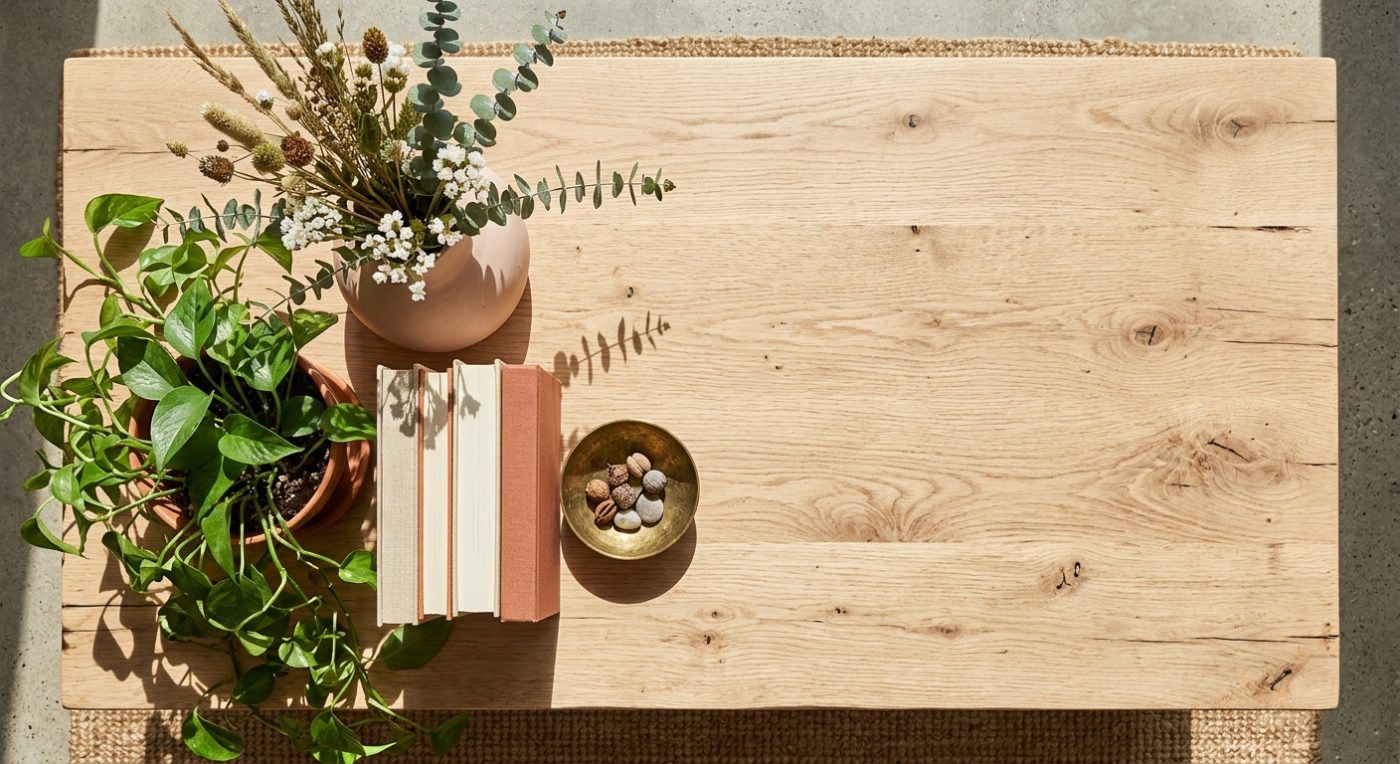
Coffee table styling always starts with an empty surface. Then a candle lands there. Then a stack of magazines, a remote, a coaster, a plant. Suddenly coffee table styling feels less like decorating and more like damage control.
It happens slowly. No single object is the problem. The pile is the problem.
Most people respond by adding more. A tray to corral the mess. A bowl to hold the small things. The surface gets busier, not calmer.
The real question isn’t what to add. It’s how much your table can carry before it stops looking arranged and starts looking cluttered.
If your coffee table needs one grounding piece rather than five, browse our handcrafted sculptures and ceramic coaster sets at lcdesigns.cc.
Learn more →There’s an answer, and it’s more flexible than you’d think. But it does have limits.
Why Odd Numbers Keep Showing Up
Designers talk about grouping in threes constantly. It sounds like superstition. It isn’t.
Even numbers pair off naturally. Two objects read as a matched set. Four objects split into two pairs. Your eye sorts them and moves on quickly.
Odd numbers resist that sorting. Three objects can’t divide evenly, so your eye keeps circling the group. That extra half-second of attention is what makes an arrangement feel considered.
This isn’t a rule you have to obey. It’s a tendency worth knowing about in coffee table styling. Plenty of beautiful tables hold two things or four.
The useful takeaway is simpler. If a grouping feels flat, adding or removing one piece often fixes it faster than swapping everything out.
The Real Limit Is Surface, Not Count
There’s no magic number of objects. A small round table and a long rectangular one have completely different capacities.
A better measure is how much bare surface remains. Aim to leave roughly half to two-thirds of the tabletop clear. Empty space isn’t wasted space.
That clearance does real work. It gives you somewhere to set down a mug, a plate, a book you’re halfway through. A table you can’t use isn’t styled, it’s staged.
It also gives each object room to be seen. Crowded pieces compete with each other. Spaced pieces read individually.
Here’s a rough coffee table styling guide by table size:
- Small round or square table: two to three objects, kept low
- Standard rectangular table: three to five objects, in one or two groupings
- Long or oversized table: two or three separate groupings, with clear gaps between
- Nesting or stacked tables: one or two objects per surface, no more
Height, Weight and the Shape of a Grouping
Objects of the same height flatten out. Your eye skims across the top and registers a single line. Nothing stands out because nothing rises.
Vary the heights and the grouping gains shape. A tall piece, a medium piece, a low one. The eye travels up and down instead of sideways.
Visual weight matters as much as height in coffee table styling. A dense ceramic form feels heavier than a glass vase of the same size. Balance heavy against light rather than lining up equals.
Texture does similar work. Smooth beside rough, matte beside glossy. Contrast keeps a small group from blurring together.
Keep the tallest object under eye level when you’re seated. Anything higher blocks the sightline across the room and makes conversation awkward.
Sorting What Stays From What Goes
The fastest way to fix a crowded table is to clear it completely. Take everything off. Look at the bare surface for a minute.
Then put things back one at a time. Stop the moment it feels full. That instinct is usually right, and it usually arrives earlier than you expect.
Sort what you removed into honest categories. Some things earn their place. Some are just there because they landed there months ago and nobody moved them.
Ask a few plain questions about each piece:
- Do you actually look at this, or do you look past it?
- Does it belong to this room, or did it migrate here?
- Is it functional, decorative, or neither?
- Would you miss it if it sat somewhere else?
- Does it repeat something already on the table?
Repetition is the sneaky one. Three small decorative objects in similar colours and sizes read as clutter, even when each is lovely on its own.
Living With a Table That Gets Used
Every styled coffee table gets undone by ordinary life. Mail arrives. Someone sets down a water glass. A phone charger appears from nowhere.
That’s not a failure of coffee table styling. It’s what the furniture is for. A table that never collects anything is a table nobody sits near.
The trick is building in room for the mess. Leave a clear corner. Keep one tray empty rather than filling it with decorative pieces.
Reset rather than restyle. Thirty seconds of putting things back beats a whole afternoon of rearranging every few months.
Seasonal shifts help too. Swapping one or two objects a few times a year keeps your coffee table styling feeling current without buying anything new.
Too many objects is whatever hides the table. When you can still see the surface and still set down a cup, you’ve got the balance right.
→Handmade Holiday Gifts for People Who Have Everything→Cork vs Ceramic Coasters: What Actually Protects Wood
Frequently Asked Questions
How many objects should I put on my coffee table?
There's no fixed number, because a small round table and a long rectangular one have very different capacities. A better measure is bare surface: aim to leave roughly half to two-thirds of the tabletop clear. As a rough guide, two to three objects on a small table, three to five on a standard rectangular one, and one or two per surface on nesting tables.
Why do designers always group things in threes?
Even numbers pair off naturally, so your eye sorts them into matched sets and moves on quickly. Odd numbers can't divide evenly, so your eye keeps circling the group, and that extra half-second of attention is what makes an arrangement feel considered. It isn't a rule you have to follow, just a tendency worth knowing about.
My coffee table grouping looks flat. What's the quickest fix?
Flatness usually comes from objects that are all the same height, since your eye skims across the top and registers a single line. Vary the heights with a tall piece, a medium piece and a low one so the eye travels up and down. If the grouping still feels off, adding or removing a single piece often fixes it faster than swapping everything out.
Do coasters count as part of the styling or as clutter?
A coaster earns its place because it does a job, and a table you can't actually use isn't styled, it's staged. Keeping a set of ceramic coasters within reach is part of leaving that half to two-thirds of the surface genuinely usable. LC Designs makes handcrafted ceramic coasters with designs including dog breeds, sea life and automotive themes.
How tall can a coffee table object be before it's a problem?
Keep the tallest object under eye level when you're seated, because anything higher blocks the sightline across the room. That's especially worth watching on a coffee table, where people are looking over the surface rather than at it. Height variation still matters, but it should happen below that line.
What kinds of decor pieces does LC Designs make for surfaces like this?
LC Designs makes handcrafted sculptures and statues, including animals, people, birds, flowers and plants, sea life and abstract forms, along with ceramic coasters and ceramic car coaster sets. There are also 3D printed earrings and small toys in the catalogue. Everything is made in-house in the studio and sold as listed at lcdesigns.cc.
How do I keep a small group of objects from blurring together?
Contrast is what separates pieces that sit close to each other. Balance visual weight rather than lining up equals, since a dense ceramic form reads heavier than a glass vase of the same size. Texture does similar work: smooth beside rough, matte beside glossy.

