
Tips & How-To
Sculpture Scale: Choosing the Right Size for Your Shelf
Oct
TL;DR
Measure your shelf's width, depth and open height first, then pick a sculpture that fills about two-thirds of that height.
- Write down three numbers before you shop: usable shelf width, depth from wall to front edge, and clear height above the shelf.
- Aim for a tallest piece that reaches roughly two-thirds of the open height and takes up about a third of the shelf's width, with the base set back an inch from the edge.
- Group in odd numbers with noticeably different heights, since three varied pieces hold the eye longer than two matching ones.
Why Scale Matters More Than You Think
Getting the sculpture scale right for your shelf is the difference between a piece that sings and one that just sits there. Sculpture scale is the quiet part of decorating. Most people notice it only when it’s wrong.
A small figure on a wide, deep shelf disappears. A tall one on a narrow ledge feels like it’s about to tip. Neither piece is at fault. The pairing is.
Measure your shelf, then browse our handcrafted sculptures at lcdesigns.cc to find an animal, bird or abstract piece that fits the space.
Learn more →Your eye reads proportion before it reads detail. Before you register the shape of a bird’s wing, you’ve already decided whether it belongs there. That judgment happens in under a second.
The good news is that sculpture scale follows patterns. Once you know the patterns, picking the right size stops being guesswork. You start choosing with confidence instead of hoping.
Measure the Shelf Before You Measure Anything Else
Start with a tape measure and three numbers. Shelf width, shelf depth, and the open height above it. Write them down somewhere you’ll actually find them again.
Height is the number people forget. A shelf can be wide and deep and still only give you eight inches of clearance. Anything taller simply won’t stand.
Depth sets your limit on sculpture scale, meaning how substantial a piece can be. A shallow shelf of four inches can’t hold a broad base safely. A deep shelf of twelve inches can take something with real presence.
Here’s what’s worth noting when you measure:
- The usable width, not counting brackets or edges
- Depth from the wall to the front edge
- Clear height to the shelf above or the ceiling
- Whether the shelf is floating or supported underneath
- How close it sits to a doorway or walking path
Keep these numbers on your phone. You’ll use them more often than you expect.
The Two-Thirds Rule and How to Use It
A reliable starting point: your tallest piece should reach about two-thirds of the open height above the shelf. That leaves breathing room at the top. Filling the whole gap makes a shelf feel crammed.
The same thinking applies to width. A single sculpture looks best taking up roughly a third of the shelf’s length. Any more and it stops being a feature and becomes the whole shelf.
Depth has a rule too, and it’s simpler. Keep the base at least an inch back from the front edge. It protects the piece and looks more settled.
These aren’t laws. They’re a place to start with sculpture scale when you have no idea where to start. Break them once you can see why you’re breaking them.
The rule works because it mirrors how we read empty space. Negative space around an object is what lets the object register as deliberate.
Thinking in Groups Instead of Single Pieces
Most shelves hold more than one thing. That changes how you judge sculpture size for shelf arrangements, because now pieces are measured against each other.
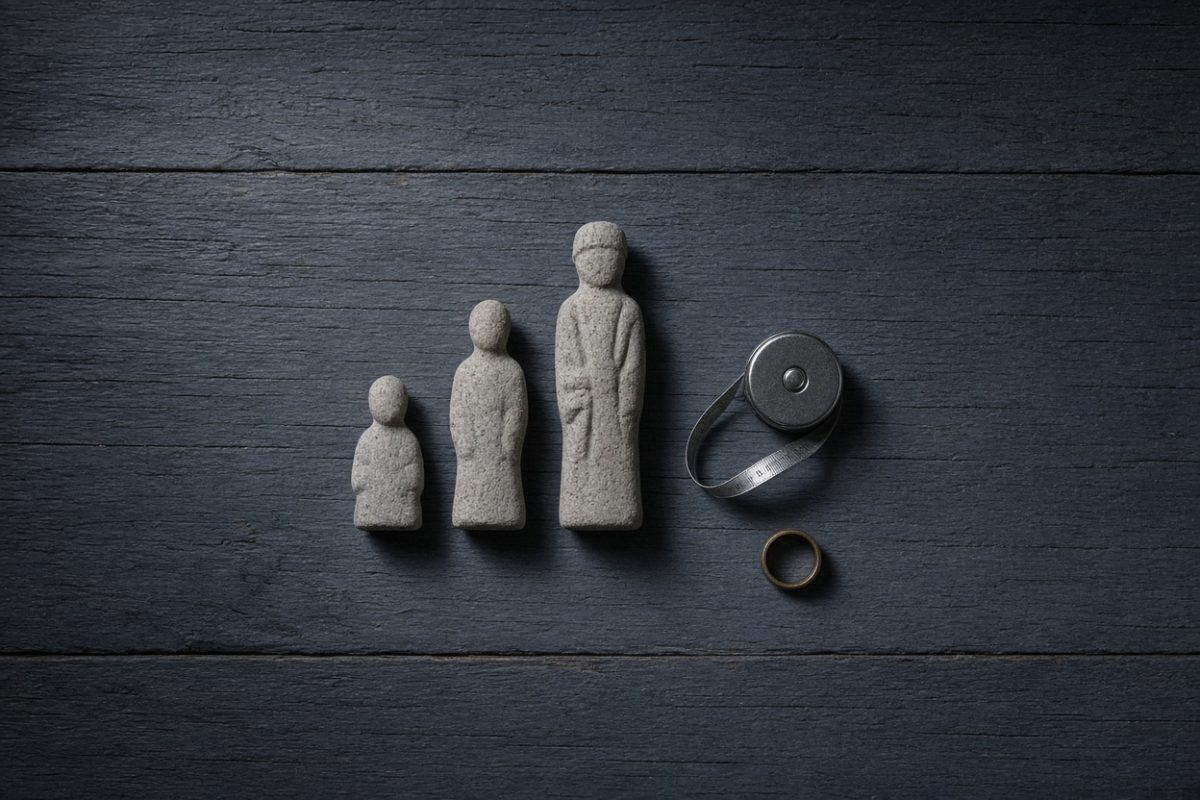
Odd numbers work better than even ones. Three pieces of different heights hold the eye longer than two matching ones. Two identical items read as a pair and feel static.
Vary the height noticeably. If your tallest piece is six inches, the next should be around four, then two or three. Small gaps between sizes look like a mistake rather than a choice.
Group in loose triangles rather than straight lines. Put the tallest slightly off centre and let the smaller pieces gather near it. Your eye travels the shape naturally.
A few grouping habits that tend to hold up:
- Cluster pieces close enough to read as one arrangement
- Leave real empty space at one end of the shelf
- Repeat one colour or material across the group
- Let a taller piece anchor the visual weight
- Pull one small item forward to add depth
How Room Size and Viewing Distance Change Everything
A sculpture that looks perfect from two feet away can vanish from across the room. Viewing distance is part of sculpture scale, and it’s almost always ignored.
In a small room, small pieces work fine. You’re never far from them, so fine detail actually registers. Crowding the space with large objects just makes the room feel smaller.
In a large open room, the opposite applies. Small items on a distant shelf read as visual clutter. One substantial piece does more work than five little ones.
Ceiling height matters as well. High ceilings pull the eye upward and make everything below look smaller by comparison. Taller pieces help restore the balance.
Test it before you commit. Stand where you’ll normally be standing, not where you happen to be arranging. That’s the view that counts.
Practical Checks Before You Commit
Listed dimensions are your friend. Height, width and depth in inches or centimetres tell you more about sculpture scale than any photo can. A photo has no scale unless something familiar sits beside it.
When the numbers feel abstract, build a stand-in. Cut a piece of cardboard to the stated height and width and set it on the shelf. You’ll know within seconds whether it fits.
Think about stability too, especially with pets or small kids in the house. A tall piece with a narrow base wants a spot further back on a deeper shelf.
Consider what sits behind the shelf as well. A busy wallpaper or a dark wall changes how much a piece stands out. Pale sculptures fade against pale walls.
Sculpture scale isn’t a talent some people are born with. It’s a handful of measurements and a bit of patience, and it gets easier every time you do it.
→Handmade Holiday Gifts for People Who Have Everything→When the Gift Doesn't Look Like the Photo
Frequently Asked Questions
How do I measure my shelf before choosing a sculpture?
Grab a tape measure and write down three numbers: shelf width, shelf depth, and the open height above the shelf. Measure the usable width without brackets or edges, and measure depth from the wall to the front edge. Keep those numbers saved on your phone, because you'll reach for them more often than you'd expect.
What is the two-thirds rule for sculpture size?
Your tallest piece should reach roughly two-thirds of the open height above the shelf, which leaves breathing room at the top instead of feeling crammed. For width, a single sculpture tends to look best when it takes up about a third of the shelf's length. It's a starting point rather than a hard rule, so break it once you can see why.
Why does scale matter so much when styling a shelf?
Your eye reads proportion before it reads detail, so you decide whether a piece belongs there in under a second. A small figure on a wide, deep shelf disappears, and a tall one on a narrow ledge looks like it's about to tip. The piece isn't at fault in either case, the pairing is.
How many sculptures should I group together on one shelf?
Odd numbers usually work better than even ones. Three pieces at different heights hold the eye longer, while two matching items read as a static pair. Vary the heights noticeably, for example six inches, then four, then two or three.
How far back from the shelf edge should a sculpture sit?
Keep the base at least an inch back from the front edge. It protects the piece from being knocked and it simply looks more settled. Shelf depth also sets your limit on how substantial a piece can be, since a shallow four inch shelf can't safely hold a broad base.
What kinds of sculptures does LC Designs make?
LC Designs makes handcrafted sculptures and statues in several categories: animals, people, birds, flowers and plants, sea life, and abstract designs. Everything is produced in-house in our studio, and pieces are sold as listed at lcdesigns.cc. Alongside sculptures, we also make 3D printed earrings, small toys, ceramic coasters and ceramic car coaster sets.

